Updated May 27, 2026
In 2019, Colorado's upper Arkansas River served up one of the biggest whitewater seasons in living memory. 2026 is poised to be a different season entirely. The Arkansas basin came into spring at roughly half its normal snowpack — about 47% of median — and an early, thin runoff points to a very low-water year for the first time in some time.
Here's what most people miss: low water doesn't mean a lesser rafting trip, just a different one. Knowing how to read it is what separates a great day on the river from a forgettable one.
The amount of snowpack and runoff is an ideal situation for white water rafting in Colorado and the State of Colorado as a whole. Colorado depends on the snowmelt and snowpack from each prior winter. Colorado doesn’t have water that flows into the State, nor do we have large lakes that rest in the Colorado landscape. Every drop of water that comes in the form of rain & primarily snowfall is flowing out of the State. A seasonal stock of water based on climatic scenarios creates a continual challenge for municipalities, agriculture, and industrial use in Colorado as well as recreation.
| Water level | Flow at Parkdale gauge | When you'll see it | What's different on the water | Best for |
|---|---|---|---|---|
| Unusually high | ~2,800–3,200 CFS | Peak snowmelt, late May–June in big snow years (e.g. 2019) | Fast, pushy, big waves; rocks buried; fewer obstructions but less margin for error. River closes above 3,200 CFS | Thrill-seekers, experienced rafters |
| Typical | ~1,000–2,000 CFS | Most of the season; the sweet spot (~2,000 is ideal) | Big, fun Class III–IV waves with clean lines and forgiving recovery | Most rafters, families on the right stretch |
| Unusually low | ~400–700 CFS | Late summer, fall, and drought years (e.g. 2026) | Slower but technical and channelized; exposed rocks mean tighter line-picking; a real guide earns their keep | First-timers wanting a milder ride, technical paddlers |
Recreation is also a large part of the watershed picture. As a whitewater rafting outfitter, Royal Gorge Rafting is fortunate in many ways. When a season has low run off the rafting becomes more technical, and with slower current, we see many people heading out to raft. On an average runoff year, we will experience moderate flows that are both suitable for a wide range of rafting participants, and we enjoy an even keel media perception. During high water runoff years, we experience fantastic whitewater features and awe-inspiring rafting. A downside for almost any water year is media perception, which guides the public understanding and generalization of the experience.
What's more, Royal Gorge Rafting offers two different routes of varying intensities and difficulties: Our Class II-III Bighorn Canyon rafting trip ideal for all ages; and our signature Class III-IV Royal Gorge rafting trip is a step up in intensity. No matter the conditions or water level, we've probably got a rafting experience that's right for you and your crew!
You have probably heard that the river on a high water year is too dangerous. The swift nature of the river at high water can create a heightened exposure, but on the same note, the rocks that are present are well under water which lessens the likelihood of finding obstructions while both rafting or in the event you fall out of a boat. The reality is that a river always contains risk like most things in life. Driving always comes to mind to me. However, when approached with the right gear and know how white water rafting during high flows is an incredible experience much more gratifying and safer than I-25 at rush hour. The key is being prepared, which is the exact reason you raft with a reputable river outfitter.
Low water flips the script. As flows drop, the rocks that high water hides come back into play — lines get tighter, technical, and a little more "bony," as we say. However, the river also slows down, so you've got more time to read what's coming and pick your way through. The prep is different but the principle is the same: the right gear still matters, sturdy footwear earns its keep when you're scrambling over exposed rock, and a guide who knows exactly where the runnable channels are at this flow is the difference between a fun and a frightening trip. A low-water year also tends to mean a longer, gentler season and a great call for first-timers — but only if you raft a stretch matched to the conditions. That's a conversation to have with your outfitter before you book, not after.
On your own, you would be in a foolish position to enter any river without the proper gear. Number one on our list is adequate floatation. Going in a river without a personal floatation device is irrational and is reserved for those ignorant of the reality of just how powerful a river is even at low water flows.
Never stand in a river. Standing in the river increases risk. You could bang your shins up on the rocks below or in a worst-case scenario you could entrap yourself by intentionally trying to stand. This situation is avoidable by not standing in the river.
Being an active swimmer if you enter the river is significant. You need to focus on getting out of the river the moment you enter the river and swimming is your best personal defense. The ability to swim is particularly important during high water runoff. If you are determined to swim to shore or back to a raft that will be a key factor in getting to shore. If you think you can’t swim to shore. You won’t. Remember the little engine that could? That’s you! If you are not swimming to the river’s edge, our guides have other methods to assist in helping you to shore. A big part of our support program is the professional kayakers we employ.
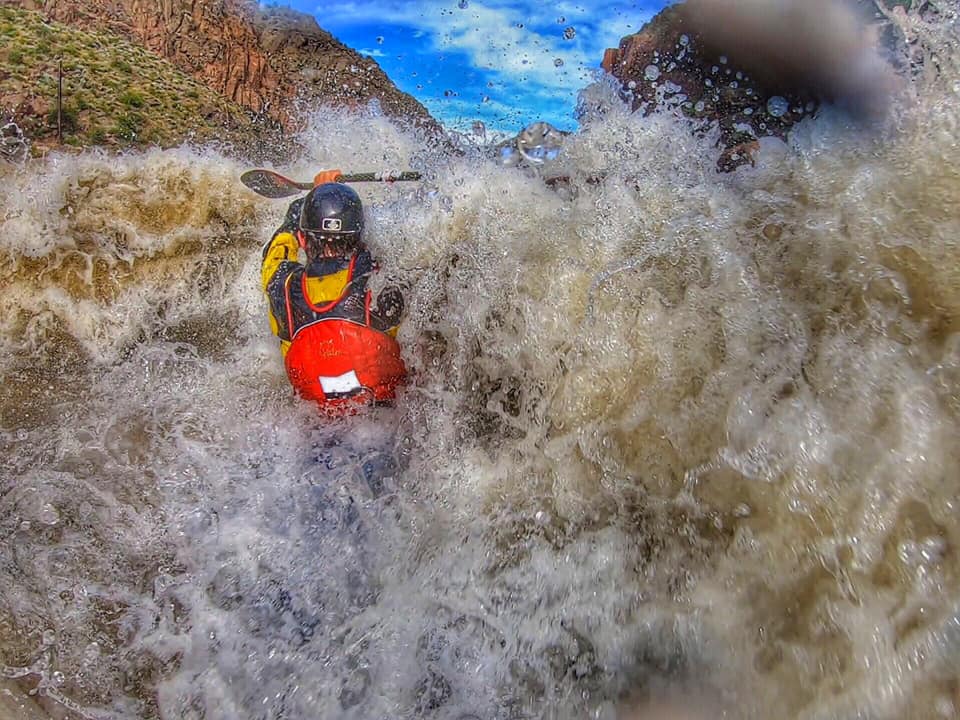
We employ kayakers at Royal Gorge Rafting & we have them run with your trip for added support. The reason we do this is that a kayaker can exit and enter the river in a way that a raft can not. A kayaker if overturned, can also right the boat and continue to assist. If a raft flips over it is more of an ordeal than a kayaker rolling upright. Kayakers can be fast in the water to support a swimmer, often the kayaker is there to give you a quick reminder to swim to shore and that kicks you back into defense mode. Our kayakers focus on downstream containment to assist a swimmer should they end up downstream of the rafts. We know our kayak support team is an essential part of our program and the few guests that have had the opportunity to meet our kayakers in the river will tell you just the same!
Go with a professional rafting company (Our favorite is Royal Gorge Rafting of course). When rafting with a professional rafting outfitter, they will have you informed, prepared with the right tools and gear, and they will have professionals running the program. You would never dare to try and fly your 747 from New York to San Francisco, nor would they let you and trust us we won’t have you guiding the boat either. There is a reason you go with a professional rafting outfitter.
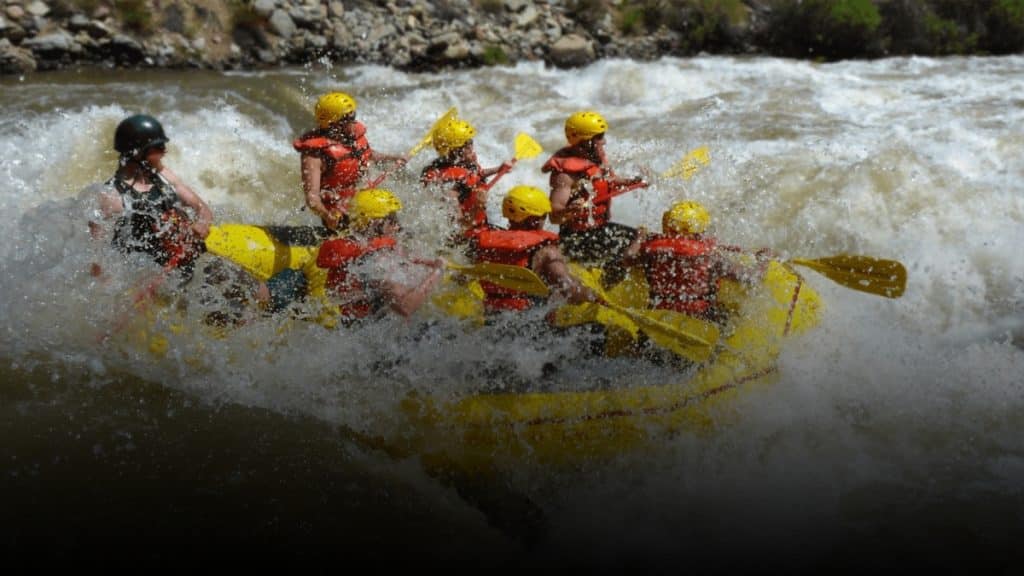
The answer here is easy for us. No. Rather than afraid, you should be prepared and excited for the fantastic experience ahead! You should be realistic with your abilities as well. If you are not in reasonable shape or if you are significantly larger than the average outdoor enthusiast, you might want to reconsider a royal gorge rafting trip. The reality is that a larger person will have a more difficult time in the event you fall out of the raft. The bigger you are, the harder it is to deal with an out of boat experience. You should also reconsider rafting if you have any history of heart or lung conditions, severe asthma, back problems, recent surgery, obesity, or osteoporosis, or if you are pregnant.
There is a lot to be aware of, and that is why we are here to show you how to have the safest and best experience when purposefully engaging the incredible sport of whitewater rafting & kayaking!
“We went on the Royal Gorge rafting trip today. The royal gorge was closed, but we did Bighorn Rapids instead. Our guide, Cheers, was amazing. I was fearful of falling out of the raft and tipping over. He calmed our fears. Not only did I feel completely safe with him as our guide, but all of the guides we had on our trip and the safety kayakers worked together and made sure all passengers and employees were safe. I would definitely use this company again! Safe and super FUN!” ~ Lisa Dribben.